

Save Big with Monthly Bookings!Save big with a monthly booking and ride worry-free all month long!
Explore Now
Pravin is a travel experience writer and a professional web developer passionate about making meaningful digital experiences. When not at work, he enjoys exploring new locations and sharing those experiences through story telling and writing. His passion for telling stories enables him to engage with people more deeply, fusing creativity and technology in all he does. Pravin wants to encourage people to travel, accept different viewpoints, and share their own special tales via his writing and art.
Summary:
Major Spiritual Landmarks: Highlights Vijayawada's top pilgrimage sites along the Krishna River, led by the hilltop Kanaka Durga Temple, Undavalli Caves, and Mangalagiri Narasimha Swamy Temple.
Etiquette & Timing: Outlines temple rules (modest dress, removing footwear) and notes that October–February and the Dussehra festival are the best times to visit.
Circuit Planning: Suggests an efficient one-day itinerary order to connect the city center temples with outlying spots like Kondapalli Fort.
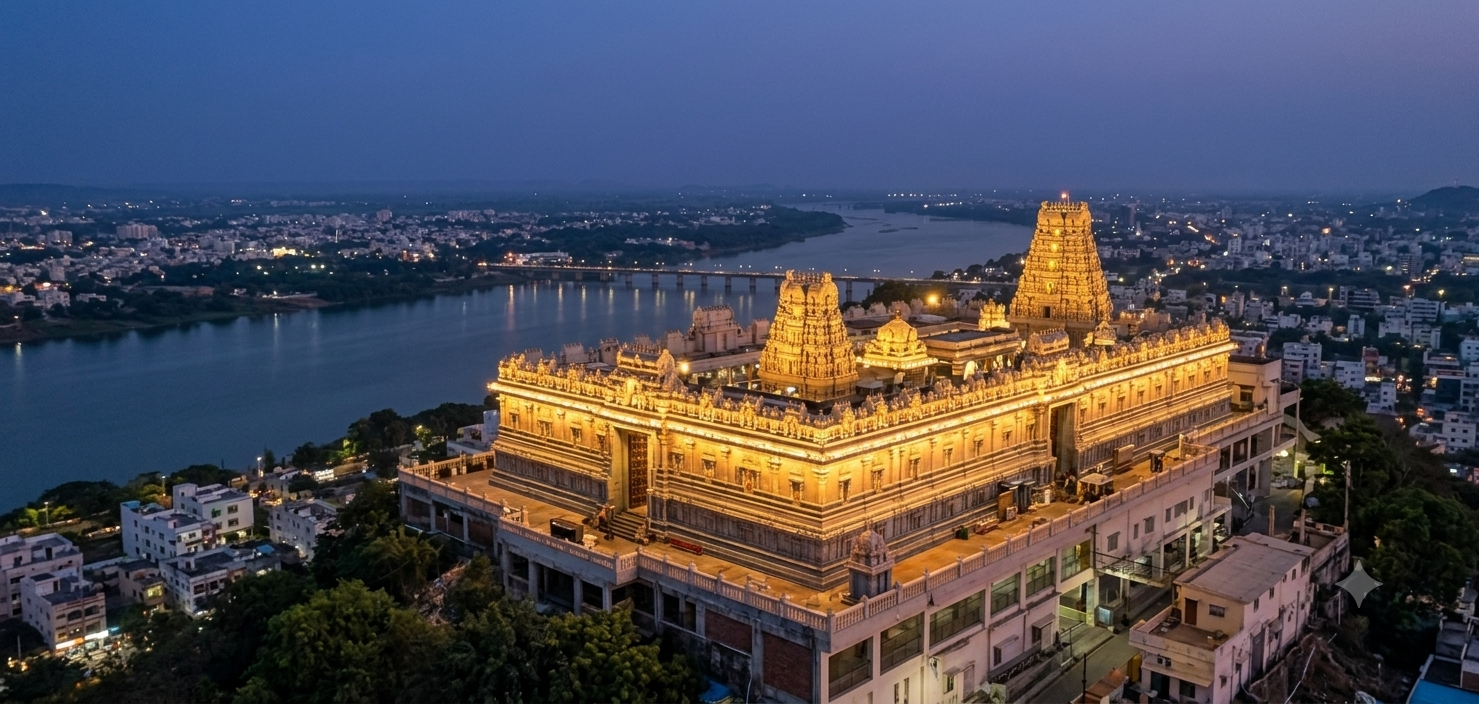
Vijayawada sits on the banks of the Krishna River, and over centuries it grew into one of Andhra Pradesh's most significant temple cities. The hilltop Kanaka Durga Temple is the obvious headline act, visible from much of the city and central to how Vijayawada thinks of itself as a pilgrimage destination. But there's a genuinely deep list beyond it, worth covering properly.
Vijayawada has several temples and cultural attractions spread across the city and nearby areas, so having convenient local transportation can make sightseeing easier. If you are planning to visit multiple temples in a day, check
bike rental options in Vijayawada for a flexible way to travel between destinations. For visitors looking for an economical option for short city rides, electric two-wheelers can be a convenient choice. You can explore electric bike rental options in Vijayawada and use an e-bike or electric scooter to get around the city while visiting its famous temples and nearby attractions.
Kanaka Durga Temple: Seat of the Goddess
Perched on Indrakeeladri Hill overlooking the Krishna, this is the temple most people mean when they say they're visiting Vijayawada for pilgrimage. Legend has it the goddess Durga chose this hill herself, and resides there permanently. Architecture blends older Dravidian elements with newer additions from ongoing renovation work. Address: Indrakeeladri, Vijayawada. Timings: roughly 5 AM to 9 PM, though hours shift during festivals. Best time to visit: early morning for shorter queues, or Dussehra, when the goddess gets a different form each day of the festival.
Undavalli Caves: Rock-Cut History
Technically caves, not a built temple, but the massive reclining Vishnu statue and the 4th-century rock-cut architecture earn this a spot on almost anyone's list. Address: Undavalli, about 6 km from the city centre. Timings: 9 AM to 5 PM. Best time to visit: weekday mornings, far less crowded than weekends.
Sri Ramalingeswara Swamy Temple: A Quieter Shiva Shrine
An older Shiva temple, noticeably calmer than Kanaka Durga, popular with locals as much as visiting pilgrims. Timings: standard temple hours, roughly 6 AM to 8 PM. Best time to visit: any weekday, it rarely draws the festival-level crowds the bigger sites get.
Mangalagiri Narasimha Swamy Temple: The Temple That "Drinks" Jaggery Water
About 12 km from the city, this hilltop temple carries an unusual tradition. Devotees offer jaggery water to the deity, and only part gets consumed, or so it's said, the rest overflows no matter how much gets poured. Address: Mangalagiri. Timings: 6 AM to 8 PM. Best time to visit: mornings, for the ritual and to dodge the midday climb heat both.
Bhavani Island Temple Complex: Temple Meets Riverside
Set on a river island, this complex pairs temple visits with a bit of a nature outing, boating and greenery thrown in. Address: Bhavani Island, roughly 8 km from the centre. Timings: 9 AM to 6 PM. Best time to visit: late afternoon, when the light on the water's at its best.
Akkanna Madanna Caves: Easy to Miss, Worth the Stop
Small rock-cut caves near the Kanaka Durga hill, dedicated to Vishnu, and often skipped by visitors moving fast through the city. Timings: 9 AM to 5 PM. Best time to visit: any time outside the peak Kanaka Durga crowd hours, since the two sites sit close together.
Sri Rukmini Satyabhama Sametha Venugopala Swamy Temple: Dravidian Detail
A Krishna temple known for intricate Dravidian-style carving and a calmer setting than the city's busier shrines. Timings: 6 AM to 8 PM. Best time to visit: early morning or early evening, best light on the carvings.
Manikonda Nrusimhaswamy Temple: A Hillock With a View
Set on a hillock with wide views over the countryside, this temple rewards the short climb with both a spiritual stop and a genuinely good photo spot. Timings: 6 AM to 7 PM. Best time to visit: late afternoon, ahead of sunset.
Malleswara Swamy Temple: Off the Usual Circuit
A Shiva temple tucked into a quieter part of the city, worth it for anyone wanting to move past the main tourist route. Timings: standard temple hours. Best time to visit: any weekday.
Kondapalli Fort Temple: History and Devotion Combined
About 20 km from Vijayawada, Kondapalli pairs a hilltop fort with a temple complex, a solid half-day trip mixing history with religious significance. Timings: 9 AM to 5:30 PM. Best time to visit: mornings, leaves enough daylight for exploring the fort itself.
Temple Etiquette and Visiting Tips
Dress modestly at every site on this list, shoulders and knees covered. Visit early morning if you want to dodge crowds and heat both, particularly at Kanaka Durga and Mangalagiri. Footwear comes off before entering, and most sites have a spot to leave shoes. Want a formal darshan or pooja booking instead of the general queue? Check the temple's counter or website in advance, availability gets tight during festival periods.
How to Reach These Temples
APSRTC buses cONNect most of these to the city centre, and autos handle the shorter hops easily. Given how spread out some of these temples are, Mangalagiri and Kondapalli especially, a one-day circuit works best in this order: Kanaka Durga early morning, then Undavalli Caves and Akkanna Madanna Caves, out to Mangalagiri next, and Kondapalli Fort last if there's still daylight.
Best Time of Year to Visit
Dussehra's the standout period at Kanaka Durga, the biggest crowds of the year for the nine-day festival. Outside that window, October through February offers the most comfortable weather for a circuit that involves a fair bit of walking, and in some cases, a hillside climb.
Where to Stay and Eat Nearby
A number of hotels and lodges cluster near Indrakeeladri Hill, convenient if Kanaka Durga's your main stop. Local eateries around the same area serve Andhra thalis and regional specialties, worth trying if you're spending a full day on the circuit.
FAQs
Q1: which is the most famous temple in vijayawada
A1: Kanaka Durga Temple on Indrakeeladri Hill, especially prominent during the Dussehra festival.
Q2: how many days do I need to visit vijayawada's temples
A2: A single, well-planned day covers the major sites: Kanaka Durga, Undavalli Caves, Mangalagiri, and Kondapalli Fort. Two days gives more breathing room if you want to add the quieter, less-visited temples too.
Q3: what are the temple rules in vijayawada
A3: Modest dress covering shoulders and knees, footwear removed before entering, and photography restrictions inside some inner sanctums, so check signage at each site.
Q4: what's the best way to get around the temples in vijayawada
A4: APSRTC buses and autos cover most routes, though a rented bike gives more flexibility for the outlying temples like Mangalagiri and Kondapalli.
Q5: what other places can I combine with a vijayawada temple trip
A5: Amaravati and Rajahmundry are both popular add-ons, each within a reasonable driving distance for a multi-day itinerary.
Was this helpful?