
Save Big with Monthly Bookings!Save big with a monthly booking and ride worry-free all month long!
Explore Now
Pravin is a travel experience writer and a professional web developer passionate about making meaningful digital experiences. When not at work, he enjoys exploring new locations and sharing those experiences through story telling and writing. His passion for telling stories enables him to engage with people more deeply, fusing creativity and technology in all he does. Pravin wants to encourage people to travel, accept different viewpoints, and share their own special tales via his writing and art.
Summary:
We often get this question and it's valid. The answer is one number. It's all about utilization.
If the bike takes up a parking space and is only used 15 days a month, that's a waste. The EMI, insurance, and parking costs all go to waste as well. In this context, a bike that is used about 21-22 days a month is a little more understandable. We care about utilization, not the bike brand or the logo's color.
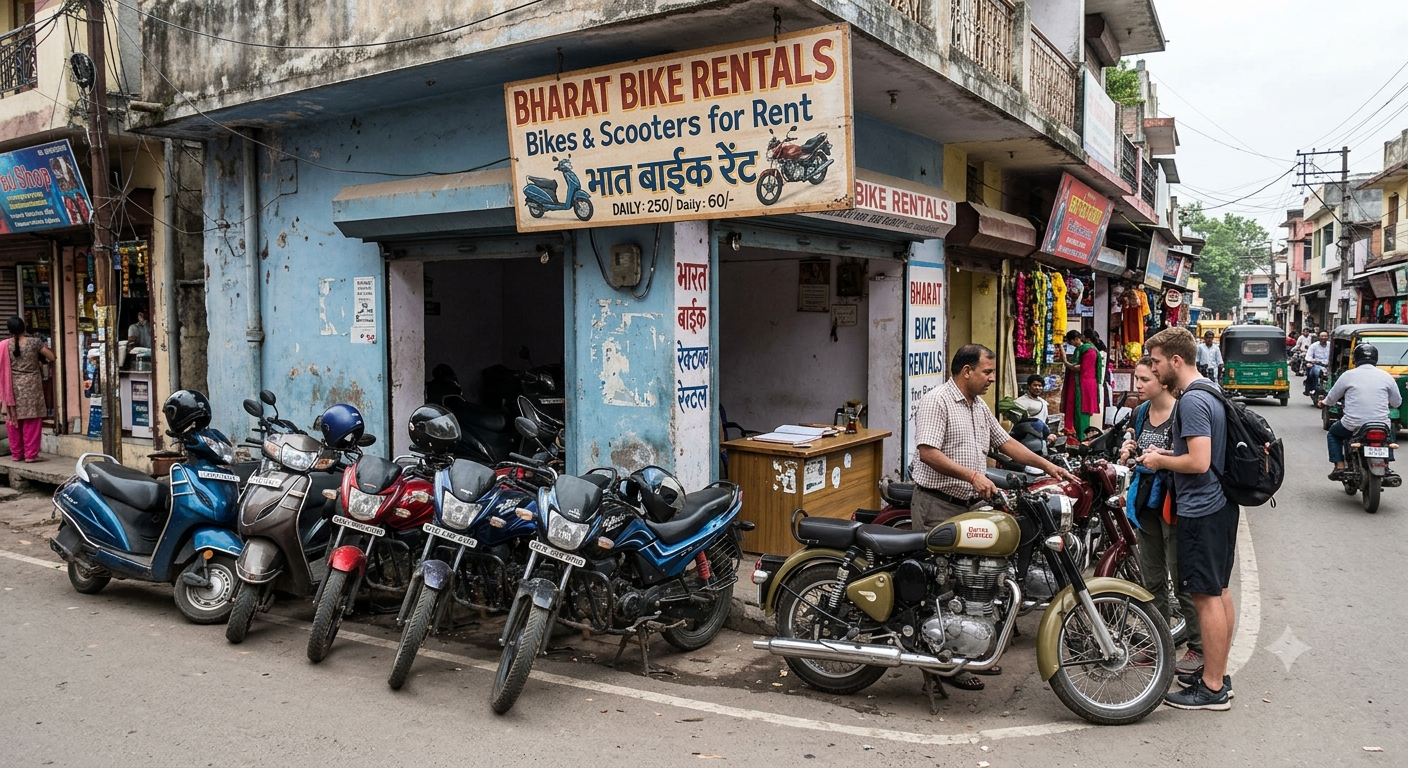
The demand for two wheeler rentals is only increasing in India, and is not likely to go down any time soon. The demand comes from gig workers, students who are moving to a new city to study, IT employees who are relocating for short to medium assignments, and domestic travelers. If you want a good and practical overview of this business, then you must be seriously looking at the bike rental business and what the potential profit margins are, or looking at which bike is best suited for rental business in India. This overview addresses both.
In short, for a 10 scooted fleet, you need to have 10-15 lakhs and you will at best have Rs.50,400 in the bank at the end of the month in 21 days/month utilization, which means an 18 month break-even. If you spend money on local marketing, the outcome could improve considerably. Below, I will address setup expenditures, potential income, what bikes to buy, the risks that no one talks about, and should you go solo or should you partner up with a platform.
Starting a bike rental business requires more than purchasing vehicles; you also need reliable booking technology, fleet management, customer support, and marketing. Entrepreneurs looking for an established operating model can explore ONN Bikes partnership opportunities to understand the support and infrastructure available for running a rental business.
Why the Self-Ride Two-Wheeler Rental Market in India Has Such Potential Today
What It Actually Costs to Get on the Road
| What You're Spending On | Rough Figure |
|---|---|
| 10 scooters to start a fleet | INR 7 - 10 Lakhs |
| Insurance per bike (yearly) | INR 6,000 - 10,000 |
| Booking Software or App | INR 10,000 - 30,000 |
| Parking or a small depot (monthly) | INR 5,000 - 15,000 |
| 1 - 2 Employees (monthly) | INR 15,000 - 25,000 |
| Local Advertising (initial) | INR 20,000 - 50,000 |
| Working Capital (keep some aside) | INR 1 - 2 Lakhs |
| Total, approximately | INR 10 - 15 Lakhs |
You do not have to begin with a fleet of 10 scooters. Many operators managing fleets of 30-40 started with 3-4 scooters, aggressively ran rentals, and reinvested. This is the right way to gauge the demand for the service in your area or district before you start investing significant amounts.
How Rental Revenue Models Actually Work
Most operators do not rely on a single rental model. Instead, they mix and match 3-4 models, or a combination of these.
A healthy fleet is a combination of all four - daily and weekly bookings to capture peak pricing, monthly and subscription bookings to sustain steady utilization during the off-peak months.
Estimated Profits
Most online resources that cover the VC perspective of a bike rental business are overly optimistic about the potential profits. Considering the estimates below, which are fairly conservative, the profit potential of a business with a fleet of only scooters versus one with a mixed fleet is as follows. The actual numbers will differ based on the city, the season, and the level of aggression with which you market the business. Use the below table as a model and not as an absolute.
| Metric | Scooter Fleet Only | Mixed Fleet |
|---|---|---|
| Fleet Size | 10 | 10 |
| Average Daily Rate | Rs. 400 | Rs. 650 |
| Days Rented Per Month | 21 | 21 |
| Gross Revenue Per Month | Rs. 84,000 | Rs. 1,36,500 |
| Operating Expenses (Assumed 40%) | Rs. 33,600 | Rs. 54,600 |
| Net Profit | Rs. 50,400 | Rs. 81,900 |
| Time to Break Even | ~18 months | ~12 months |
The estimates above are fairly conservative. Those who take an aggressive approach to marketing (utilize the GMB listing, post public notices at the local colleges, set up WhatsApp broadcasts, partner with local hostels and paying guest houses) can achieve a much better financial outlook than the one outlined in the table, with utilization and occupancy estimates between 80 and 85 percent.
Expect your rental demand to be low in the first three months, and be prepared in your budgeting for that.
What Bikes Will You Invest in for Your Rental Fleet?
Don't forget that e-bikes and scooters are also appearing in more fleets. The initial investment is more costly, but the cost to maintain the e-bikes and scooters is significantly lower than gas, and the scooters and e-bikes work well for city tourists and short distance commuters since their range is limited. Also, if you have a gas-powered fleet, adding a small number of EVs is a great way to test the market and validate the demand without the commitment of a larger investment.
The Risks That Don't Show Up in the Revenue Table
The above profit projections assume everything runs smoothly. There are, however, several risks for which a fuller description is warranted as they materialize often enough, rather than a brief description as a footnote. These include:
Working Independently vs. Working Within Established Partnerships
| Factor | Going Independent | Working with Partnerships |
|---|---|---|
| Creating an infrastructure for booking & payment systems | You create your own | You are provided with one |
| Developing brand recognition | You create your brand | You have an established customer base |
| Providing customer support | You handle this | You have support for this |
| Creating and controlling your pricing & fleet | You have full control | There's control within the partnership |
| Time needed to get the first customer | You need to create the demand | Customers are waiting to be serviced via the platform |
| Best for | Business operators with existing skills for tech and marketing | Business operators with a fleet and local knowledge with no skills for tech and business marketing |
If you are starting a rental business from scratch, you need to manage a booking system, payment system, provide customer support, cover marketing and insure the business.
ONNBikes has partnered business model where you bring the local fleet and knowledge and they bring the marketplace and tech. This partnership model serves a business start up well because the customers are searching for ONNBikes, not a new rental business. See if this partnership model fits your needs and your situation before you decide to start the business from scratch and implement all the options.
If you want to partner for the franchise model instead of building the model on your own, contact ONNBikes on https://ONNbikes.com to discuss the model for your city.
Disclaimer: all values in this guide are estimates. Many factors influence the values such as how the business is run, the fleet, and locations and seasons of the business. Therefore these should be used as estimates, and not definitive values.
Common Questions
Q1: What is the approximate value to start a bike rental business in India?
A1: The cost is roughly Rs. 10-15 lakhs to cover a fleet of 10 biked. This cost covers all biked rental business expenses. If this is too steep you can start with 3-5 bikes which costs approximately Rs. 4-6 lakhs. This is how most of the successful bike rental businesses started.
Q2:
What registrations and licenses are required?
A2: The very basic requirements for starting a bike rental business are: business registration (simple proprietorship), a GST registration, and commercial insurance for all the bikes. You will also need to check if your state requires a transport permit for a rental fleet. It is best to do this research before starting the business, and not after.
Q3:
What are the best cities to start a business?
A3: Bangalore, Pune, and Hyderabad offer the best business opportunities year-round. For a business that offers good rental income with a business that has a lot of tourist rentals, you can try Jaipur or Udaipur. In a few years, with less competition, Vizag and Mysore is where you want to look if you want to get into a business that has great growth potential.
Q4: Should I partner with a platform like ONNBikes or try to build something on my own?
A4: It all depends on your assets and skills. If you have the bikes and market knowledge but are not interested in building the tech or brand, you will likely be better off forming a partnership in order to eliminate a majority of the risks of starting the business. I would recommend that you reach out to someone at ONNBikes via ONNbikes.com to discuss some of your ideas before making a decision.
Was this helpful?