

Save Big with Monthly Bookings!Save big with a monthly booking and ride worry-free all month long!
Explore Now
Pravin is a travel experience writer and a professional web developer passionate about making meaningful digital experiences. When not at work, he enjoys exploring new locations and sharing those experiences through story telling and writing. His passion for telling stories enables him to engage with people more deeply, fusing creativity and technology in all he does. Pravin wants to encourage people to travel, accept different viewpoints, and share their own special tales via his writing and art.
Summary:
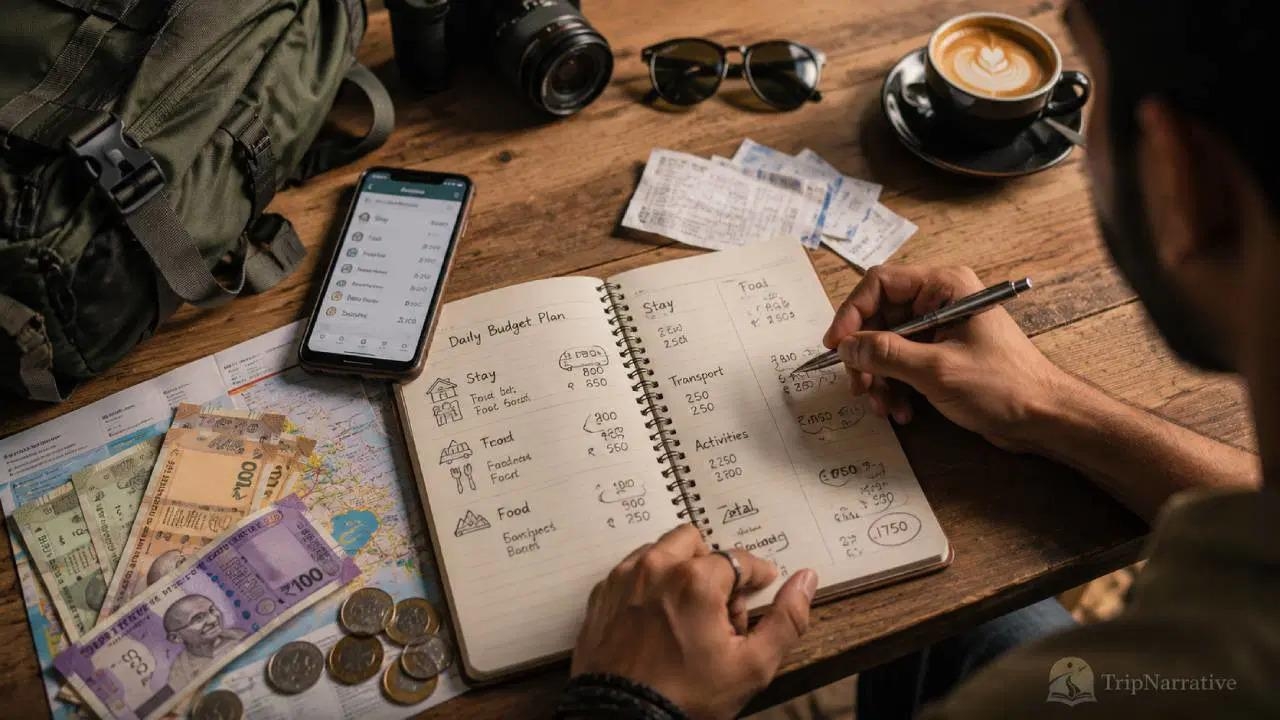
Budgeting takes way longer than most people expect, so if you don't typically plan your trips with a budget, you're probably in the majority with a rough estimate of how much you'll spend. This guess most often falls short with fees that should've been planned for, expensive meals, and transportation costs that weren't accounted for.
Having your budget calculated before your trip means you can enjoy the last two days of your vacation, instead of going into your personal savings to afford your flight home. The following guide shows you how to create a travel budget that actually works and explains how to prepare a travel budget.
The travel budget can be summarized in four steps. The first step is pricing your destination with current costs. The second step is separating the costs that won't change and those that will. The third step is establishing the amount you will spend daily on travel, and the last step is increasing the total budget by 15% for costs that will inevitably arise. The following budget guide is estimated in INR for the year 2025-2026, so make sure to do the currency exchange before you travel.
To make your travel plans even better, be sure and actually get the most accurate cost for your trip. And be sure and consider who is going with you on your travel plans.
Booked a hotel room by yourself? Or maybe you have a hotel room to yourself? The latter is probably the case if you're traveling with a group; otherwise, group travelers usually end up paying for the hotel room themselves. The cost of the hotel room splits in equal halves amongst the group.
Two-day trips aren't worth the cost. For example, traveling away for two days and returning within the two days is really covering the cost of a Rs. 800 round trip for a Rs. 400 trip. You'd be better off booking a trip to the same destination for five days.
| Destination Type | Accommodation (Per Night) | Food (Per Day) | Local Transport (Per Day) |
|---|---|---|---|
| Metro cities (Bangalore, Hyderabad) | Rs. 500 - 1,200 | Rs. 300 - 500 | Rs. 200 - 400 |
| Tourist cities (Goa, Jaipur) | Rs. 600 - 1,500 | Rs. 350 - 600 | Rs. 250 - 500 |
| Hill stations (Coorg, Munnar) | Rs. 700 - 2,000 | Rs. 300 - 500 | Rs. 300 - 600 |
| Offbeat (Dandeli, Mulki) | Rs. 400 - 800 | Rs. 200 - 350 | Rs. 150 - 300 |
These are not official prices, but estimates based on commonly seen listings and traveller feedback. Always check the current prices on Zostel or Booking.com for your destination before setting your budget. If you are coming from outside India, convert the INR to your currency at the current exchange rate. A currency exchange of 5-10% can exceed the overall expense by impacting the budget of individual expense items. For example, a dorm in Goa and a heritage guesthouse in Udaipur have the same price range, but are not the same experience nor the same price.
A note on sources: The figures throughout this guide are drawn from publicly listed rates on booking platforms and traveller-reported spending, not a single fixed price list, so treat them as a planning range rather than a guarantee. Prices move with season and city, so always cross-check current listings for your specific dates before finalizing a budget.
Fixed costs - deal with these first
Variable costs - be liberal with your estimates
Total your variable costs, and then divide that total by the number of days to determine how much you can afford. Consider making the limit a phone lock screen reminder.
You should keep track of that each day for yourself. Don't let yourself overspend like you did on day 5 since you thought day 7 was the day of your return.
A daily limit is only useful if you actually check it against what you spent. Track it before you leave, not on day two of the trip:
You stabbed the rental bike. Couldn't find an entry fee. One night was too hot to stay in the Rs.400 hostel without AC. You missed the train and had to stay the night in the budget that was blown. This kind of stuff happens on every trip. You plan for things that you know about so that you feel less guilty.
Common Budget Mistakes to Avoid
Here are 3 examples of common travel mistakes, along with some explanations of why they aren't good ideas.
Example: 3 Nights in Goa, Solo
| Expense | Cost |
|---|---|
| Round trip sleeper train from Bangalore to Goa | Rs.900 |
| 3 nights in a hostel | Rs.1,500 |
| Scooter from ONNBikes (Rs.400/day for 3 days) | Rs.1,200 |
| Food (Rs.400/day for 3 days) | Rs.1,200 |
| Beach entry and one activity | Rs.500 |
| Miscellaneous buffer | Rs.800 |
| Total | Rs.6,100 |
It is possible to get to Goa for 3 days for Rs.6,100 including the train fare. Creative planning for accommodations and meals is the key, along with some flexibility on budget.
An important factor in this trip is renting a scooter. Without one, you would be spending Rs.300-500 everyday on taxis and auto rickshaws just to reach the beaches. A taxi for 3 days is more than the cost of the 3 day scooter rental.
Planning your trip and need a rental? ONNBikes has scooter rentals for Rs.300/day and Rs.500/day bikes in Jaipur, Udaipur and more. Hassle free rentals with no deposits or paperwork.
Set your destination costs, segregate your fixed and variable costs, and keep a daily budget with a 15% padding. After the first trip, all the others will be easier to budget.
Planning your trip with ONN Bikes? Save money on local transport by reading our complete guide to bike rentals for tourists and make your travel budget go further. Transportation can be one of the biggest travel expenses. Learn how you can reduce costs with ONN Bikes by comparing bike rentals and ride-sharing costs before your next trip.
Q1: How much should accommodation cost?
A: Accommodation should be about 30-35% of your total budget. This leaves room for the bigger expenses. Hostels should be under this range. Your ability to enjoy your trip will be affected by spending over 50% of your total budget on accommodation.
Q2: What is the easiest way to keep track of spending while traveling?
A: The easiest way to track spending is to keep a notes app on your phone. At the end of each day, write a total for the day and give a rough estimate of the spending categories. For group travel, Splitwise is a great app to track shared expenses. Spendings trackers prevent overspending. They should not be used to track every small detail of spending.
Q3: How do you avoid spending the budget on transport?
A: If you plan on doing a lot of transport during the trip, renting a scooter and paying the daily rate is better than paying for each transport trip. In the span of 3-4 days, significant savings of Rs.600-1,500 could be made compared to using autos and cabs.
Was this helpful?